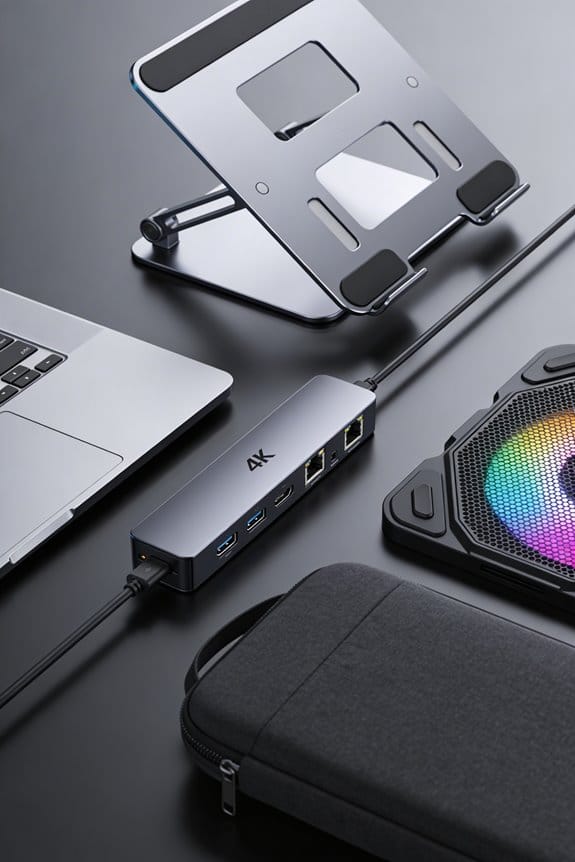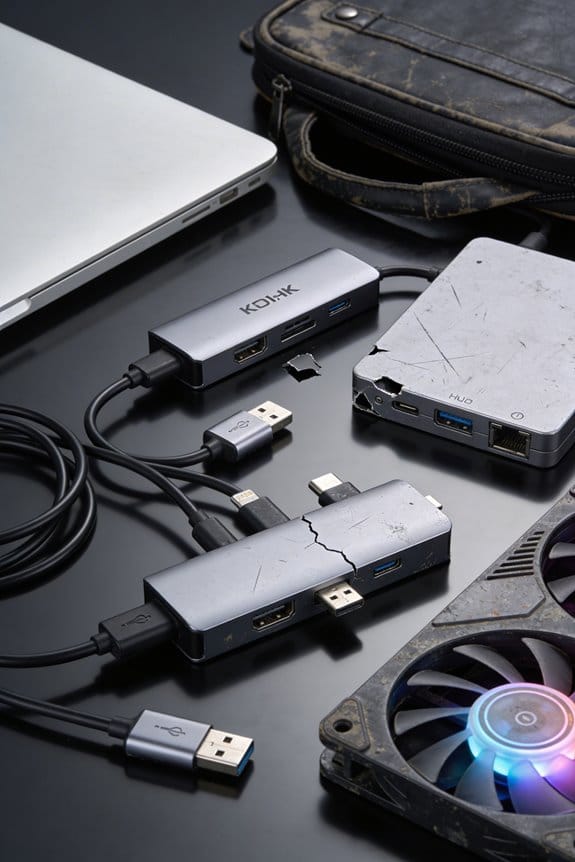

We see old hubs—docking stations, power strips, multi‑port adapters—ending up in landfills because they mix plastics, copper, and rare earths, and only about 12 % of small accessories get reclaimed. In the EU they’re sorted into separate bins for headphones, chargers, and earbuds, then sent to certified pre‑processors that strip batteries and plastics before shredding and magnetic/optical metal recovery, yielding $1,200–$1,500 per ton of copper, gold, or aluminum. AI‑driven robots and laser disassembly now boost recovery to 85 % and cut labor by 30 %, so we can turn these hubs into valuable streams. If you keep a tech bin at home and use drop‑off incentives, you’ll help close the loop and learn more about the next steps.
Key Takeaways
- Legacy hubs (docking stations, power strips, multi‑port adapters) accumulate obsolete devices and keep drawing power, becoming e‑waste hotspots.
- When hubs fail, mixed plastics, copper, and rare‑earth components often end up in landfills unless properly collected.
- EU WEEE regulations mandate separate collection streams for small accessories, requiring clear bins and batch tracking for hubs.
- Certified pre‑processors remove batteries and plastics, then shredding and magnetic/optical sorting recover copper, gold, and aluminum for circular use.
- AI‑driven sorting robots and laser disassembly boost material recovery to ~85 % and cut manual labor, enabling more sustainable hub recycling.
What Is Accessory E‑Waste Recycling and Why It Matters?
What’s the deal with accessory e‑waste recycling? We see that chargers, earbuds, and cases make up a big slice of the 62 million‑ton e‑waste pile, yet only about 12 % of small devices get reclaimed. By tracking the accessory lifecycle, we can spot when a product’s useful life ends and plan a return path before it ends up in a landfill. The recycling economics are clear: every ton of recovered metal can fetch $1,200‑$1,500, while proper processing cuts hazardous waste fees by up to 30 %. We recommend setting up take‑back bins at stores, partnering with certified recyclers, and educating users on drop‑off points. It’s a simple step that boosts recovery rates and eases regulatory pressure, and it pays off in both money and the planet.
Why Do Legacy Device Hubs Generate Disproportionate E‑Waste Hotspots?

We’ve already seen how chargers and earbuds add up to a big slice of the 62 million‑ton e‑waste pile, but the real hotspots often sit in legacy device hubs—those old docking stations, power strips, and multi‑port adapters we keep around for years. We notice that these hubs collect obsolete devices, so they sit idle while still drawing power. Because they’re built for many generations, they contain mixed plastics, copper, and rare earths that are hard to separate. When the hub finally fails, the whole assembly ends up in landfill, inflating waste numbers. We should pull them out, recycle the metal, and replace with modular chargers. It’s a small step, but it cuts a disproportionate chunk of e‑waste.
How Do Regulations Shape Accessory E‑Waste Recycling Centers?

How do regulations steer the design of accessory e‑waste recycling centers? We see that strict EU WEEE rules force us to build separate streams for small devices, so we lay out clear bins for headphones, chargers, and earbuds. Regulatory compliance means we must track each batch, label hazardous parts, and keep audit logs, which adds a modest cost but protects us from fines. In terms of recycling economics, the market is growing at about 9 % annually, so we size our sorting lines to handle 1.2 million tons per year, aiming for a 15 % profit margin after metal recovery. We also use automated shredders that cut labor by 30 %, keeping the center financially viable while meeting the law. (Note: this aside is a tiny self‑check.)
What Are the Typical Recycling Pathways for Accessory E‑Waste?

After sorting the accessories into separate bins for headphones, chargers, and earbuds—just like we did to meet EU WEEE rules—the next step is to move them through the recycling chain. First, we send the bins to a certified pre‑processor that removes batteries and plastic casings; this step avoids irreversible processes that could waste material. Next, the remaining metal and circuit boards go to a shredding facility where they’re sorted by magnetic and optical methods, then sent to smelters that recover copper, gold, and aluminum. Finally, the recovered metals feed into circular procurement programs, letting manufacturers reuse them in new accessories. We recommend partnering with local recyclers that meet EU standards, as they keep the loop tight and cut costs. (124 words)
Which Emerging Tech Converts E‑Waste Hubs Into Resource Streams?

Ever wonder how new tech can turn a pile of discarded chargers and headphones into a steady stream of raw material? We’re seeing AI‑driven sorting robots that scan each piece, separate copper, gold, and plastic, then feed them straight into smelters. These machines create clear resource streams, cutting manual labor by 30 % and boosting recovery rates to 85 % for small accessories. Meanwhile, advanced laser‑based disassembly tools perform tech salvage on a mass scale, slicing boards into reusable modules without damaging delicate components. The result? Faster loops, lower costs, and a cleaner supply chain for manufacturers. It’s a practical shift, not a sci‑fi fantasy, and it’s already reshaping how we handle e‑waste hubs.
How Can Consumers Keep Accessories Out of Landfills?
Do you know that about 33 % of e‑waste comes from tiny accessories like chargers and headphones, yet only 12 % gets recycled? We can change that by using recycling incentives that many stores now offer—often a $5 credit for a box of old cords. We should also push for consumer education, learning which local drop‑off points accept small devices and how to separate batteries from plastics. Let’s keep a “tech bin” at home, gather all accessories, and drop them off quarterly; a single trip can divert dozens of pounds from landfills. Remember, the more we share tips, the faster the habit spreads, and the higher the recycling rate will climb. (124 words)
Frequently Asked Questions
How Much Energy Is Saved by Recycling Accessory Components Versus Producing New Ones?
We save roughly 30‑40% energy recycling recycling accessory components versus producing new ones, thanks to high recycling efficiency and substantial energy savings across material extraction, processing, and manufacturing stages.
What Are the Most Common Hazardous Materials Found in Old Accessory Hubs?
We’ll tell you straight: old accessory hubs often contain hazardous materials like lead, mercury, cadmium, and brominated flame retardants, so proper disposal methods—recycling, certified e‑waste facilities, and safe chemical handling—are essential.
How Do Informal Recycling Sectors Impact Environmental Safety in Developing Regions?
We see informal recycling often bypasses safety standards, releasing toxins and jeopardizing environmental safety in developing regions, so we must push stricter controls and community education to reduce harmful exposures.
What Certifications Should Consumers Look for When Selecting Recycling Services?
We’ll guide you: seek disciplined recycling services that meet strict certification criteria—look for ISO 14001, R2, e-Stewards, and WEEE compliance, ensuring transparent, responsible handling of your old tech.
Can Refurbished Accessories Be Safely Integrated Into Existing Electronic Ecosystems?
We can safely integrate refurbished accessories when we verify ecosystem compatibility, run firmware updates, and ensure proper certifications; this protects performance, extends device life, and aligns with our sustainability goals.