
We’ve all felt a sudden blackout ruin a day of work, so we know a 20 Ah‑plus power bank is the quickest, most reliable lifeline for keeping laptops, phones, and routers alive when the grid fails. A 20,000 mAh unit can power a laptop for about eight hours, a phone for two days, and a router for twelve, plus a USB‑C fast‑charge port and rugged case keep everything safe. Pair it with a small 2 kW generator or a 100 W solar panel for endless daytime recharge, and follow simple battery‑care tips—stay between 20‑80 % charge, keep it cool, and rotate every few months. Keep reading and you’ll see how to choose the perfect model and set up your backup system.
Key Takeaways
- High‑capacity power banks keep laptops, phones, and routers running during outages, preventing work interruptions for digital nomads.
- A 20 000 mAh bank supplies up to eight hours of laptop power, two days of phone charge, and twelve hours of router operation.
- Choose banks with ≥20 Ah capacity, USB‑C fast charging, rugged cases, multiple ports, and built‑in voltage regulation for device safety.
- Pair a power bank with a small generator and a 100 W solar panel to extend runtime and enable daytime trickle recharging without a full inverter.
- Preserve battery health by storing between 20 %–80 % charge, keeping it cool, using smart chargers, and rotating the unit every three months.
Why Power Outages Hurt Digital Nomads
Why do power outages hit digital nomads so hard? We rely on steady electricity for laptops, routers, and chargers, so a 40‑minute to hour‑long blackout can stall a whole day’s work. Our nomad mobility means we jump from café to co‑working space, yet each spot still needs a reliable grid; when it fails, we lose internet, phone service, and even AC, which hurts focus. Outage resilience becomes our lifeline—without backup, we scramble for generators or cafés with spare plugs, which isn’t always possible. In Siquijor, power only ran four hours a day, forcing us to plan around generators and limited Wi‑Fi. The lesson is clear: we must build outage resilience into every trip, or our productivity suffers.
Keep Your Gear Running With a Power Bank for Digital Nomads

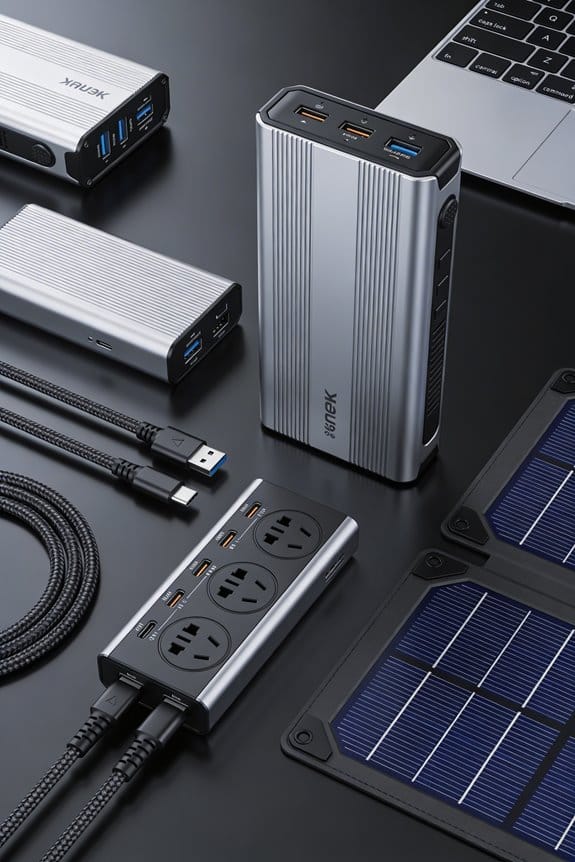
After the last outage we saw how quickly a dead grid can stall our work, so let’s talk about the tool that keeps our gear alive: a high‑capacity power bank. We pack it in our bags, and it gives us outage safety when the lights flicker, letting us charge phones, laptops, and even a small router. A 20 000 mAh unit can run a laptop for eight hours, a phone for two days, and a router for twelve hours, which smooths nomad logistics when cafés close and generators kick in. We keep a solar panel handy to top it up in a day, and we store a spare cable for quick swaps. It’s a simple habit, but it saves us from scrambling for a plug.
Select the Best Power Bank for Digital Nomads

A solid power bank is the quiet hero that keeps our nomad life moving when the grid goes dark. We need at least 20 Ah capacity, fast‑charge USB‑C, and a rugged case, because outage resilience matters more than a sleek look. Look for a model with multiple ports, so we can charge a laptop, phone, and drone in one go, and a built‑in voltage regulator that protects devices during voltage spikes. Weight is key for nomad mobility, so choose a 1‑kg unit that still offers 30 000 mAh; it fits in a backpack without hogging space. We prefer brands with a 2‑year warranty and real‑world tests, not just marketing hype. A small LED indicator helps us gauge remaining charge at a glance, saving time when we’re on the move.
Combine Your Power Bank With Portable Generators or Solar Panels

Ever wonder how to stretch that 30 000 mAh power bank when the grid’s out? We pair it with a small portable generator, say a 2 kW unit, and a 100 W solar panel. The generator tops up the bank in an hour, while the panel adds a steady trickle during daylight, keeping our devices alive for days. This combo boosts outage metrics, letting us track how many hours we stay powered versus the grid. It also builds nomad resilience, because we can move from a campsite to a rooftop and still have juice.
We hook the generator to the bank’s input port, use a charge controller for the panel, and set a timer to avoid overcharge. The result? A reliable backup that lasts beyond the usual 4‑6 hour cell‑tower limit, without needing a full‑size inverter. It’s simple, cheap, and effective—just what any traveling worker needs.
Protect and Extend Your Power Bank’s Life

We’ve already seen how a generator or a solar panel can keep a 30 000 mAh bank topped up, but the next step is making sure that bank lasts as long as possible. We protect outage resilience by treating the battery chemistry with care: avoid full discharges, keep the charge between 20 % and 80 %, and store it in a cool, dry place. We also use a smart charger that stops at 90 % to reduce stress, and we rotate the bank every three months to balance cells. When we travel, we keep a small insulated pouch to guard against heat spikes, and we never leave it in a hot car. These habits add up, giving us a longer‑lasting power companion without extra cost.
Frequently Asked Questions
How Do Power Banks Affect My Travel Insurance Coverage?
We tell you that travel insurance typically includes device coverage, but it often excludes power banks unless they’re listed as essential equipment, so we recommend confirming policy details before relying on them.
Can I Use a Power Bank to Charge a Laptop While on a Train?
We picture a humming train carriage, lights flickering, and we assure you: yes, you can charge a laptop with a power bank, just keep it away from airline safety‑restricted areas and follow the train’s regulations.
What Safety Certifications Should I Look for in a Power Bank?
We recommend looking for certified safety marks like UL, CE, and FCC on lithium‑ion banks, plus RoHS compliance; these guarantee the cells meet fire, shock, and electrical standards.
Do Power Banks Work With Electric Scooters or E‑Bikes?
We can charge scooters and e‑bikes, but only if the bank’s high capacity matches the vehicle’s draw; portable chargers, renewable energy adapters, and silent generators can bridge gaps, yet check voltage and connector compatibility first.
How Many Charge Cycles Can a High‑Capacity Power Bank Sustain?
We can expect roughly 500‑800 charge cycles from a high‑capacity power bank, so it’ll last years of travel. Pair it with travel insurance for peace of mind if the bank fails unexpectedly.