
We start by blotting the spill with a dry microfiber cloth, pressing gently so we don’t scratch the tracking surface; for ink, a quick dab of cotton ball soaked in rubbing alcohol works well. Next we mix 1 teaspoon mild dish soap with warm water, dip a soft brush, and swirl in small circles for about 10 seconds, then wipe away the suds with a clean, damp cloth. After patting the area dry, we let the mat air‑dry for ten minutes before using it again. Keep going and you’ll discover more tips for deeper cleaning and finishing.
Key Takeaways
- Blot spills immediately with a dry microfiber cloth, pressing gently without rubbing to protect the tracking surface.
- For ink or sticky residues, dab a cotton ball lightly moistened with rubbing alcohol, let sit a few seconds, then blot dry.
- Use a mild dish‑soap solution (1 tsp per warm‑water cup) and a soft‑bristled brush in tiny circular motions; rinse with a damp cloth.
- After cleaning, pat the area dry with a clean microfiber towel and air‑dry for at least 30 minutes, avoiding direct heat or sunlight.
- Test any cleaner on an inconspicuous spot first, and never submerge the mat unless the material (rubber, fabric, leather) is confirmed water‑resistant.
How to Spot‑Treat Coffee, Ink, and Other Desk‑Mat Spills
Ever spilled coffee or ink on your desk mat? We act fast, because a coffee spill can set quickly. First, blot the wet spot with a dry microfiber cloth—don’t rub, just press. For an ink stain, dab a cotton ball moistened with a little rubbing alcohol, letting it sit a few seconds before gently tapping. Next, mix a teaspoon of mild dish soap with warm water, dip a soft brush, and swirl it in a small circle over the spot. Wipe away suds with a clean, damp cloth, then pat dry. We usually let it air‑dry for ten minutes before using the mat again. This quick routine saves the surface without harsh chemicals.
Desk Mat Cleaning Tools for Rubber, Fabric, and Leather
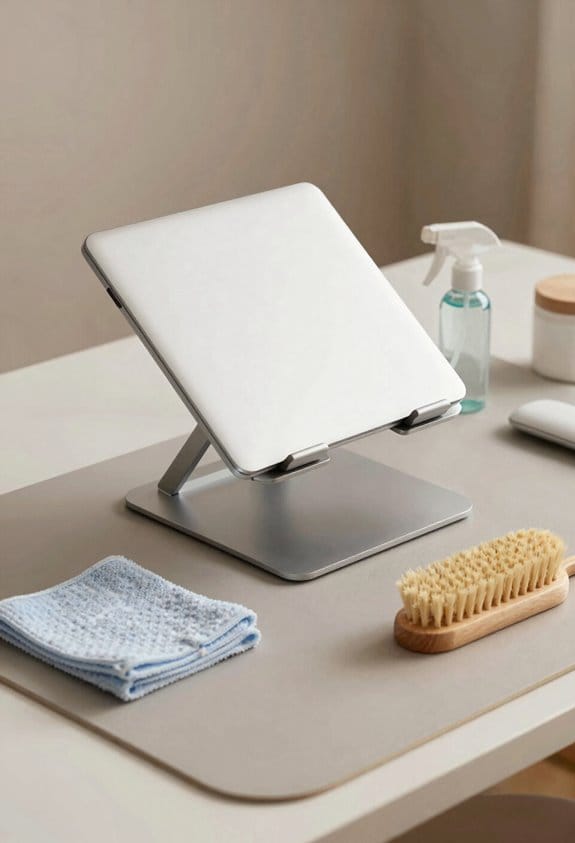
How do we pick the right tools for rubber, fabric, and leather desk mats? We start with dust removal using a soft dry cloth or a brush‑attachment vacuum; this clears loose debris without scratching. For rubber we trust a microfiber mop and a gentle scrub brush, because rubber tolerates mild soap and water but hates harsh chemicals. Fabric benefits from a lint roller and a soft‑bristled brush, which lift hair and grime while respecting material compatibility. Leather needs a damp cotton cloth and a leather‑safe cleaner; we avoid soaking and use a dry microfiber to blot excess moisture. Test any cleaner on a hidden spot first, then work in small circles, rinse lightly, and dry with a clean towel.
Desk Mat Spot‑Cleaning Method That Protects Tracking
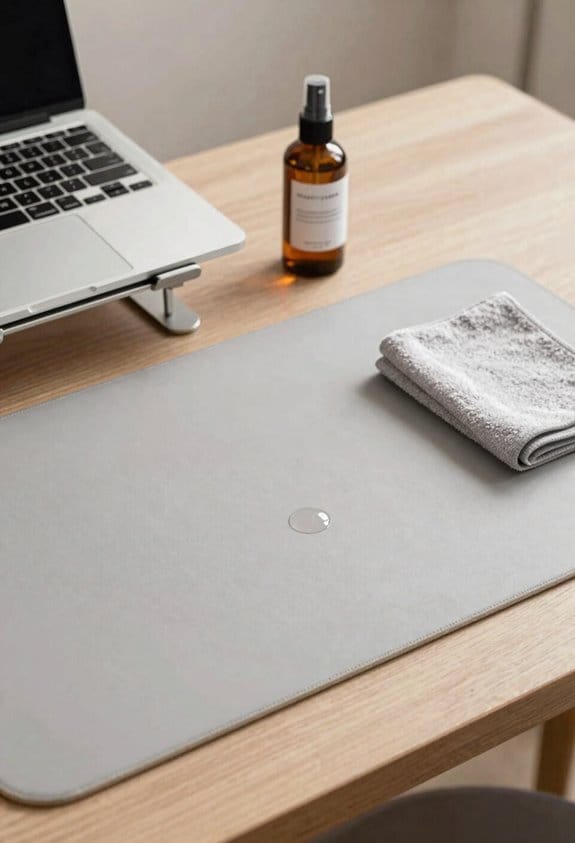
Why worry about a tiny coffee ring ruining your desk mat’s tracking? We know that a small spot can throw off the mouse sensor, so we treat it fast. First, blot with a dry microfiber cloth, then mix one teaspoon of mild soap in warm water. Dip a soft‑bristled brush, rub in a tiny motion for 10‑15 seconds, and wipe away residue with a damp cloth. This spot‑cleaning method respects surface compatibility, whether the mat is rubber, fabric, or leather, and keeps the tracking surface intact. The subtopic relevance is clear: a quick, gentle clean prevents larger problems. Remember to test any solution on an unseen area, and you’ll keep the mat responsive without fuss.
When to Submerge Your Desk Mat and How to Deep‑Clean Safely
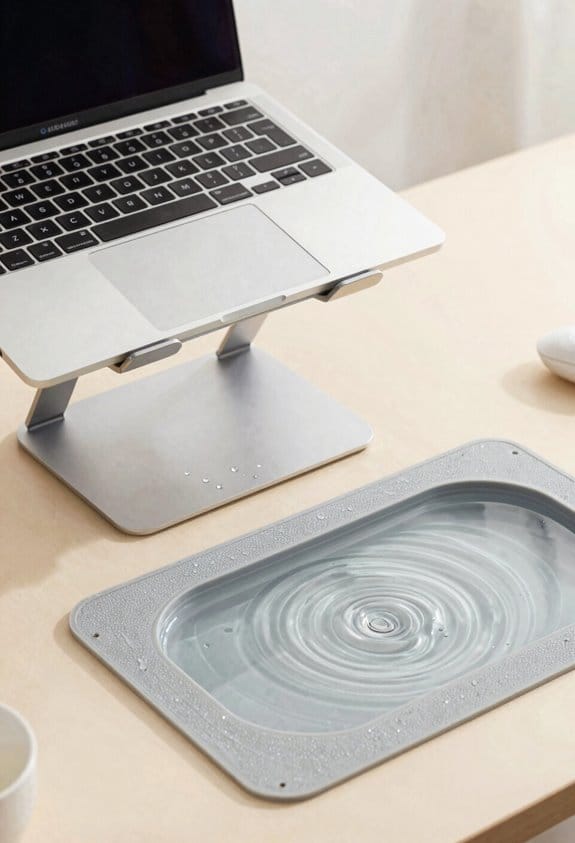
If your desk mat’s surface is rubber, fabric, or even leather, we can safely submerge it when it’s heavily soiled or stained. We’ll treat this as a two word discussion ideas moment, focusing on subtopic: immersion timing. First, we dust and shake the mat, then we test a tiny soap spot. When the grime is visible across the whole area, we fill a sink with warm water and a few drops of mild soap, submerge for 2–5 minutes, and swish gently. After soaking, we scrub with a soft brush, rinse until no bubbles remain, and blot dry with a microfiber towel. Remember, only submerge when the mat can handle water; otherwise, stick to spot cleaning. This approach keeps the tracking surface intact while removing deep stains.
Desk Mat Drying & Finishing Tips to Prevent Warping
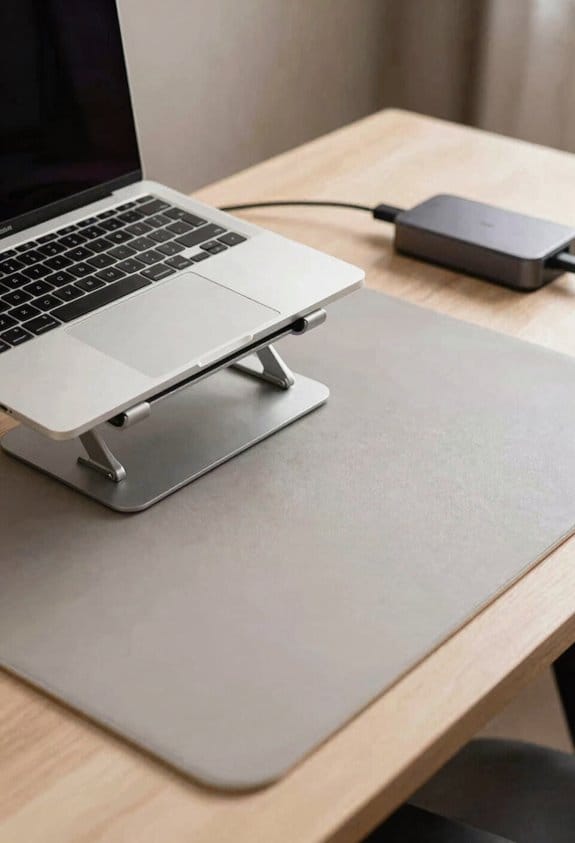
A good drying routine starts right after you’ve rinsed the mat, and we’ve learned that a gentle blot with a dry microfiber towel removes most of the excess water in seconds. We then lay the mat flat on a clean rack, letting it air‑dry for at least 30 minutes, avoiding any direct sunlight or heaters. If you need faster results, a low‑speed fan can circulate air, but we skip the unrelated technique of using a hair dryer because it can cause warping. Once the surface feels dry to the touch, we flip it over and repeat the blot‑dry step on the back, ensuring no hidden moisture. Finally, we press a light weight, like a book, for a few minutes to keep the edges flat; this simple finishing tip stops the mat from curling, even on an irrelevant topic like desk décor.
Common Desk‑Mat Cleaning Errors & Quick Fixes
Ever notice how a quick swipe with a harsh cleaner can turn a smooth desk mat into a sticky mess? We’ve all been there, using ammonia or bleach to tackle a coffee spill, only to leave a residue that attracts dust. The first error is skipping spill prevention; a simple coaster or desk blotter can stop the mess before it starts. Next, we often forget lint free cleaning—using a cotton towel leaves fibers that cling to the tracking surface, so we reach for a microfiber cloth instead.
Another common slip is over‑wetting the mat; a few drops of water are enough, then blot dry with a lint‑free towel. If a stain persists, we dab a little mild soap solution, let it sit 30 seconds, then rinse with a damp microfiber cloth. Finally, avoid harsh scrubbing—soft circular motions protect the texture and keep the surface even for mouse tracking.
Frequently Asked Questions
Can I Use a Hair Dryer to Speed up Drying?
We’d say, “Sure, a hair dryer’s like a racecar on a lazy Sunday—speedy, but it can scorch the mat.” Use it briefly on low heat, keep distance, and watch the drying speed improve.
Will a Silicone Mat Affect Cleaning Methods?
We’ll tell you that silicone interactions can change cleaning method impact; the mat’s non‑porous surface lets us use milder soaps, avoids harsh scrubbing, and still protects the tracking area.
Is It Safe to Clean a Matte‑Finish Surface With Vinegar?
We’ve found that cleaning with vinegar on a matte‑finish surface is generally safe, as long as you dilute it and avoid prolonged exposure; this coincidence highlights how gentle solutions protect the finish while removing grime.
How Often Should I Replace My Desk Mat’s Anti‑Slip Backing?
We recommend replacing the backing roughly every 12‑18 months, depending on how often you clean it. If you’re cleaning frequently—say weekly or bi‑weekly—inspect the anti‑slip layer regularly and swap it out when it starts to wear.
Can I Apply a Protective Spray After Cleaning?
We say yes—apply a light protective spray after cleaning, but test it first and keep scent considerations in mind; a subtle, non‑overpowering fragrance ensures the mat stays fresh without overwhelming your workspace.